Fleet Management Software For Small Businesses: A Complete Guide
5 minutes read
Updated on May 07, 2026
In 2026, fleet management is no longer just about knowing where your vehicles are. For small and medium enterprises (SMEs), it has evolved into a survival tool against rising operational costs and stringent environmental regulations. This guide explores how the right fleet management software (FMS) can transform your small business from a cost center into a profit engine.
What Is Fleet Management Software
If you’ve been relying on spreadsheets, manual tracking, or simply "winging it," you’re not alone. Many small businesses start this way. But as operations grow, cracks in these systems become harder to ignore—vehicles end up in the wrong places, maintenance gets delayed, and costs quietly spiral out of control.
Fleet management software for small business changes that. Whether you operate cars, trucks, or even ships, this standalone app or cloud-based solution is designed to streamline and optimize fleet operations. By integrating technologies like GPS and telematics, fleet management software provides real-time insights into your vehicles’ location, performance, and efficiency—all accessible from one dashboard. With powerful tools for vehicle tracking, route planning, and fuel usage monitoring, it helps you avoid costly mistakes, improve operational efficiency, and stay focused on growing your business.
Why Small Businesses Need FMS
While large corporations have long used telematics, SMEs are now the fastest-growing segment in the FMS market. According to recent 2025-2026 industry reports, the benefits are quantifiable:
Lower Fuel Costs: AI-powered route optimization and idle reduction can cut fuel consumption by 25% to 35% (Source: Oxmaint 2025).
Fewer Breakdowns: Predictive maintenance tools help reduce unexpected vehicle breakdowns by up to 25% (Source: NexTraq).
Improved Delivery Efficiency: Real-time GPS tracking and smart dispatching improve delivery performance by 10% to 15% (Source: Verizon Connect 2026).
Safer Fleets: AI video telematics reduce accident-related costs for SMEs by 19% through driver behavior monitoring (Source: Verizon Connect 2026).
Faster ROI: Small businesses achieve full ROI from fleet management systems in an average of 10.3 months (Source: G2 Crowd).
Read more: What Is GIS? A Complete Guide to Geographic Information Systems
Core Features Every Small Business Needs
When choosing a provider, don't pay for "bloatware." Focus on these four pillars that deliver the most value for limited budgets:
A. Real-Time GPS & Geofencing
Beyond simple tracking, geofencing allows you to set virtual boundaries. You receive instant alerts when a vehicle enters or leaves a job site, ensuring high accountability and preventing unauthorized use.
B. Predictive Maintenance (The "Anti-Downtime" Tool)
In 2026, we've moved past "scheduled" maintenance. Modern FMS uses engine diagnostics to predict failures 4 to 8 weeks before they happen. For a small business with only 5-10 vehicles, one truck being out of service can halt 20% of your revenue.
C. AI Video Telematics
Dashcams are now intelligent. They detect signs of driver fatigue, distracted driving (mobile phone use), or harsh braking, providing real-time coaching to drivers and protecting your business from fraudulent insurance claims.
D. EV Fleet Integration
As cities implement more "Green Zones," many SMEs are switching to Electric Vehicles (EVs). Your software must be able to track battery health, SOC (State of Charge), and locate the nearest compatible charging stations in real-time.
You may interested: What Is 3D Mapping And What Is It Used For
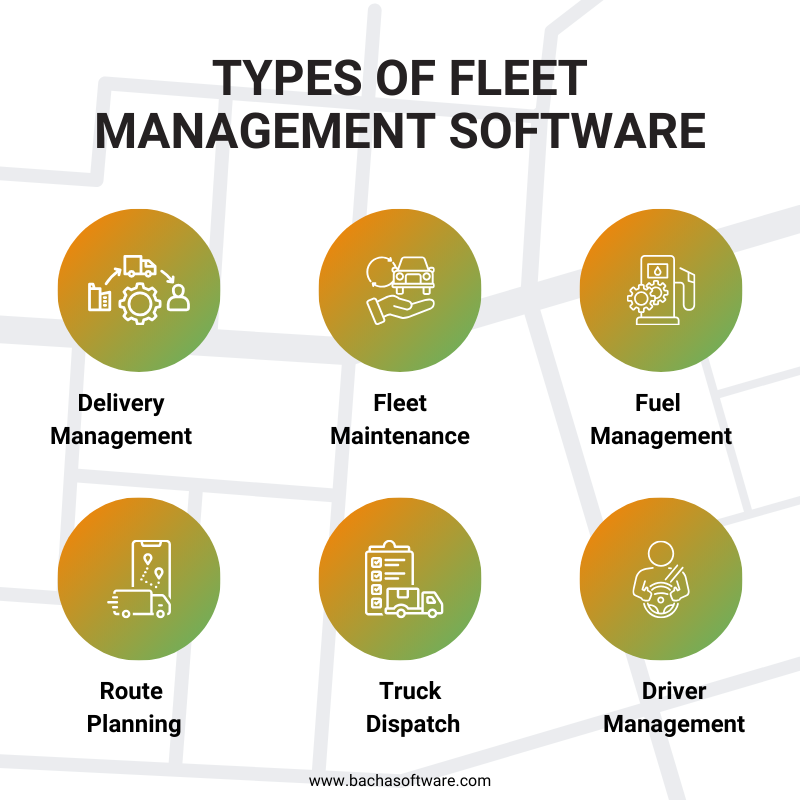
Types Of Fleet Management Software For Small Businesses
Having the right software can make all the difference when managing a fleet. Depending on what you need, fleet management software comes in various types to help streamline operations, save time, and keep costs under control. Here's an overview of the most common types of fleet management software:
1. Delivery Management
Managing deliveries can get complicated, especially when there are multiple stops and deadlines to meet. Delivery management software handles it all—from order management to route optimization and tracking. It ensures deliveries are on time, provides real-time updates to customers, and makes your entire delivery process more efficient.
2. Fleet Maintenance
The last thing you want is for your vehicle to break down unexpectedly. Fleet maintenance software helps prevent that by tracking all maintenance schedules, inspections, and repairs. It sends reminders for routine checkups and maintenance, so your vehicles stay in top shape and avoid costly downtime.
3. Fuel Management
Fuel is one of the largest expenses for any fleet, and it can be hard to keep track of. Fuel management software lets you monitor fuel usage across your entire fleet in real time. It helps reduce fuel waste by tracking consumption patterns, identifying inefficiencies, and providing insights that allow you to optimize your fuel spending.
4. Route Planning
Time is money, and route planning software helps you make the most of both. It optimizes the routes for your drivers, considering factors like traffic, road conditions, and vehicle capacity. With real-time updates, it ensures that your drivers take the best possible routes, saving fuel, time, and improving customer satisfaction.
5. Truck Dispatch
Managing a fleet of trucks involves coordinating tasks and keeping everything running smoothly. Truck dispatch software makes this easier by helping you assign tasks, track driver progress, and optimize the dispatch process. With better communication between dispatchers and drivers, you improve efficiency and reduce delays.
6. Driver Management
Your drivers are key to keeping things running smoothly. Driver management software helps you keep track of their performance, behavior, and schedules. From monitoring driving habits (like speeding or harsh braking) to scheduling shifts and ensuring compliance with regulations, this software helps you optimize your driver workforce and improve safety.Learn more: A reliable software testing services provider
Top Fleet Management Solutions for SMEs
Samsara: Best for all-in-one AI functionality and ease of use. Offers real-time GPS tracking, AI dashcams, predictive maintenance, and advanced analytics in a user-friendly platform.
Verizon Connect: Best for robust reporting and long-term reliability. Ideal for businesses needing detailed fleet insights, route optimization, and scalable enterprise-grade solutions.
Motive (formerly KeepTruckin): Best for driver safety and compliance. Strong focus on ELD compliance, AI-powered driver monitoring, and reducing accident risks for commercial fleets.
Quartermaster: A rising star for ultra-small fleets (under 5 vehicles) looking for low-cost entry. Simple asset tracking and maintenance tools make it ideal for startups and local service businesses.
How to Implement FMS Without Disrupting Operations
Transitioning to a digital system can be daunting. Follow this 3-step framework:
Start Small: Begin with basic GPS and fuel tracking before moving to advanced AI video.
Focus on Driver Buy-in: Frame the software as a "safety tool" that protects them from false accusations, rather than a "spy tool."
Analyze and Pivot: Use the first 3 months of data to identify the "Bottom 10%" of your routes and drivers for immediate optimization.
The Future: AI and the Autonomous Shift
By late 2026, we expect to see "Autonomous Dispatching" become affordable for small businesses. This means the software will automatically assign the best driver to a job based on their remaining hours, proximity, and even their historical performance on similar tasks.
Challenges of Developing Fleet Management Software In-House
Building fleet management software in-house can be costly and time-consuming, especially for SMEs. Here are the main challenges:
- Lack of Expertise: Fleet systems require specialized knowledge in logistics, GPS tracking, telematics, and real-time data processing.
- High Development Costs: Hiring developers, designers, and QA engineers significantly increases upfront investment and long-term expenses.
- Project Complexity: Features like live tracking, route optimization, maintenance alerts, and third-party integrations make development highly complex and resource-intensive.
Why Outsource Fleet Management Software Development?
Outsourcing fleet management software development helps businesses reduce costs, accelerate deployment, and access specialized expertise without building a full in-house team. At BHSOFT, we combine deep experience in fleet technology with strong capabilities in GIS, GPS, 3D mapping, and mapping APIs to deliver scalable, custom-built solutions for SMEs.
Our team develops tailored fleet management systems with features like real-time GPS tracking, route optimization, vehicle monitoring, maintenance scheduling, and advanced mapping visualization. Whether you need a web platform, mobile app, or integration with existing systems, we provide end-to-end development services designed around your operational needs.
By partnering with BHSOFT, businesses can launch faster, lower development costs, and gain access to experienced GIS and fleet software engineers while focusing on core business growth instead of complex technical challenges.

Conclusion
In sum, fleet management software for small businesses is a game-changer. By bringing everything from GPS tracking to maintenance scheduling under one roof, it saves you time, cuts costs, and helps your business run more smoothly. With the right solution, you can make smarter decisions and focus on what truly matters—growing your business.
Ready to optimize your fleet? Contact BHSOFT today for a free consultation and discover how our tailored solutions can transform your operations.