AI Chatbot Development: Empower Your Business with 24/7 Support
5 minutes read
Updated on May 06, 2026
The world is entering the era of Generative AI. Chatbots are no longer rigid, rule-based auto-responders; they have evolved into intelligent digital assistants capable of understanding context, nuance, and intent. For modern enterprises, AI Chatbot development is no longer just a trend—it is a competitive necessity to personalize customer experiences and scale operations efficiently.
What Is an AI Chatbot?
An AI chatbot is a software application that simulates human-like conversations using AI, NLP, and increasingly large language models (LLMs). Unlike rule-based bots, it can understand intent, learn from interactions, and generate personalized responses.
Popular examples include Amazon Alexa and Apple Siri, used daily by millions.
The global chatbot market surpassed $10 billion in 2025 and is expected to reach $15–20 billion by 2027, growing at over 20% CAGR. This growth is driven by rising demand for automation, better customer experience, and cost efficiency.
Today, businesses use AI chatbots to improve engagement, streamline operations, and scale support in a digital-first world.
A quick question: How does an AI chatbot work?
AI chatbots operate using two core technologies: NLP and Machine Learning. NLP allows chatbots to understand and process human language, while Machine Learning enables them to improve over time. When a user asks a question, NLP interprets the query, and Machine Learning suggests an appropriate response based on past data. This process is quick and automatic, allowing users to interact with chatbots as if they were speaking to a real person.
Why AI Chatbots are Essential for Modern Businesses
In 2026, the "backbone" of customer service is driven by intelligence. Here is why businesses are prioritizing AI Chatbot integration:
24/7 Seamless Availability: Provide instant support across all time zones without human fatigue.
Massive Scalability: Handle thousands of concurrent conversations without compromising response quality.
Significant Cost Efficiency: Reduce operational costs in customer service centers by up to 30% through automation.
Data-Driven Insights: Analyze user behavior in real-time to refine marketing strategies and product development.
Key Components of an Intelligent AI Chatbot
To be truly "smart," a chatbot requires a sophisticated tech stack. At Bachasoftware, we focus on:
NLP & NLU: Natural Language Processing and Understanding to decipher human intent and entities.
Large Language Models (LLMs): Utilizing cutting-edge models like GPT-4, Gemini, or Llama 3 for human-like dialogue.
RAG (Retrieval-Augmented Generation): Connecting the chatbot to your private corporate database to ensure responses are accurate, factual, and secure.
Omnichannel Integration: Ensuring a unified experience across Websites, Mobile Apps, Facebook Messenger, and WhatsApp.
How Are AI Chatbots Different from Traditional Ones?
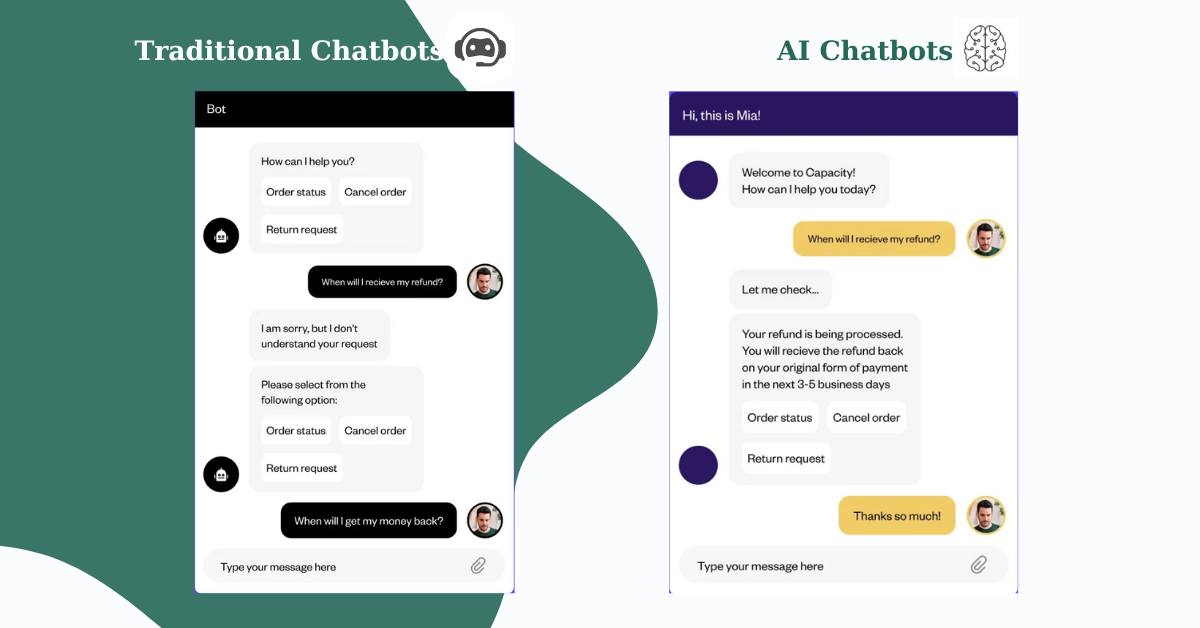
Traditional chatbots are often rule-based, relying on scripted responses that work well for straightforward queries but struggle with more complex or unexpected questions. These rule-based chatbots use "if-then" logic, so if a query doesn’t match predefined keywords or patterns, they typically can't respond accurately, resulting in limited flexibility.
How AI Chatbot Development Benefits Your Business
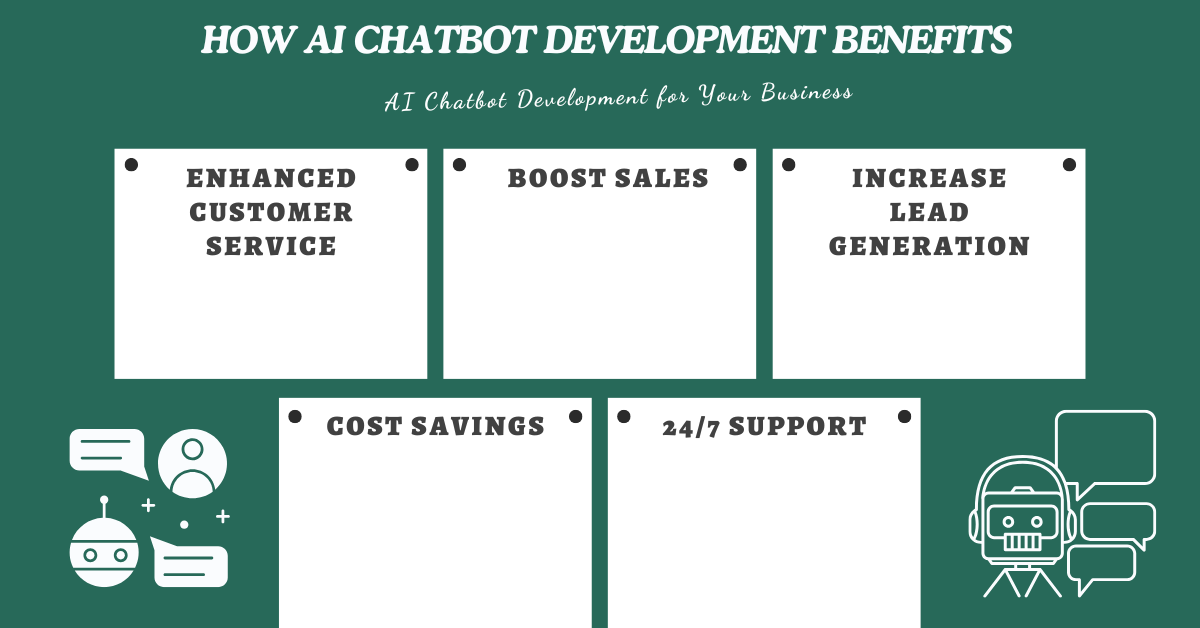
As a business owner, what concerns do you have about AI chatbot development? Will it provide the benefits your business needs? With over 10 years of experience in providing Chatbot Development Services, we’ve compiled some key benefits of AI chatbot development for you to consider:
Enhanced Customer Service: Chatbots can handle up to 75% of interactions (Gartner), providing instant resolutions and reducing the load on your human staff.
Boosted Sales: Around 67% of business leaders report that chatbots have increased sales by guiding customers through product searches and the checkout process.
Lead Generation: Over half of companies use AI to greet and qualify new visitors immediately, ensuring potential leads are captured the moment they land on your site.
Significant Cost Savings: By automating high-volume inquiries, businesses can save up to $300,000 annually in staffing and operational costs.
24/7 Availability: 64% of customers value around-the-clock support. Chatbots ensure your business never sleeps, resolving issues even outside of standard office hours.
What popular industries are leveraging AI chatbots?
AI chatbot development is used across various industries, enhancing customer experiences and optimizing internal operations. Detailed as follows:
Healthcare
AI chatbots assist in appointment scheduling, symptom checking, and providing general medical advice. They are an excellent solution for healthcare providers looking to reduce wait times and improve patient interactions.
Retail
Retailers use AI chatbots to recommend products, assist with shopping queries, and manage returns. Chatbots improve the shopping experience by guiding customers to relevant products, increasing engagement, and driving sales.
Ecommerce
In eCommerce, chatbots help automate the customer journey, from browsing to purchase. They also manage customer support by answering questions about orders, shipping, and returns.
Finance
In finance, AI chatbots handle routine inquiries, assist with fraud detection, and help customers manage transactions. For instance, banks use AI to help clients with account balances, budgeting tips, and even financial planning.
Travel and Tourism
Travel companies use AI chatbots to help travelers with bookings, itineraries, and cancellations. They also assist in suggesting destinations, based on user preferences, and provide real-time travel updates.
How to Implement an AI Chatbot?
An AI chatbot can be a powerful tool to transform your business, offering efficient customer interactions, automation of repetitive tasks, and personalized support. To implement an AI chatbot that adds real value, follow this seven-step guide:
1. Identify the Purpose of Your Chatbot
First, you need define what you want the chatbot to accomplish. Determine its primary goals—whether to enhance customer support, drive sales, gather information, or handle another specific task. A clear purpose will guide its design and development.
2. Choose the Deployment Channel
Then, you can decide on the platform where your users will engage with the chatbot. Options include your website, mobile app, or popular messaging platforms like WhatsApp, Facebook Messenger, or Slack. Choose a channel that aligns with your target audience's preferences.
3. Choose the Platform
Selecting a chatbot platform suited to your needs is crucial. Options like Dialogflow, IBM Watson, or Microsoft Bot Framework offer a variety of features and integrations. Now, you should choose a platform that fits seamlessly into your existing technology environment and supports your business objectives.
4. Design the Conversation Flow
In this step, you need create a conversation flow that feels natural and intuitive. Anticipate common user questions, map out responses, and incorporate a friendly, helpful tone. This step is crucial for ensuring a smooth and enjoyable user experience.
5. Test Your Chatbot
Then, conduct rigorous testing to identify potential issues. This step aims to ensure the chatbot responds accurately to a wide range of inputs and that users find it easy to interact with. Addressing these issues early will improve user satisfaction.
6. Train Your Chatbot
You can use real user data to train the chatbot, enhancing its Natural Language Processing (NLP) and Machine Learning capabilities. Training allows the chatbot to better understand user intent, ensuring it responds more accurately over time.
7. Deploy and Monitor
After deployment, closely monitor the chatbot’s performance. Specially, you need collect feedback, analyze interactions, and make regular updates. Continuous improvement is essential for maintaining relevance and adapting to evolving user needs.
.png)
Following these steps will help ensure your AI chatbot delivers meaningful results and supports your business goals effectively.
How Much Does It Cost for AI Chatbot Development?
The cost of developing an AI chatbot varies depending on its complexity, features, and whether you build it in-house or outsource it. On average, creating a basic AI chatbot can range from $5,000 to $15,000/ project, while more advanced systems with machine learning capabilities can cost upwards of $500,000/ project. Here’s a breakdown of options:
Building Your Own AI Chatbot: from approximately $5,000 to $20,000 per month and even more
If you have an in-house team with AI expertise, developing a custom chatbot may be a cost-effective solution. Tools like Google’s Dialogflow, Microsoft Bot Framework, and IBM Watson offer robust platforms for creating chatbots. However, building in-house requires a significant investment in talent and time, which may be challenging for companies with limited resources.
Hiring an AI Development Company: from $1,000 to 5,000/project and more
Many companies prefer to hire specialized AI development companies to create and maintain their chatbot systems. This approach ensures professional expertise but can be costly, especially for complex systems. Specially, using chatbot development services from an expert AI development partner can be invaluable for businesses without AI resources.The Development Process: From Concept to Deployment
Our development lifecycle follows the Agile methodology to ensure flexibility and rapid ROI:
Requirement Analysis: Defining the goal—whether it's lead generation, customer support, or internal HR automation.
Platform & Model Selection: Choosing between Cloud-based (OpenAI, AWS) or On-premise solutions for maximum data privacy.
Data Training & Fine-tuning: Customizing the model with industry-specific data to ensure the bot speaks your brand's voice.
System Integration: Linking the chatbot with existing CRM and ERP systems (like Odoo or Salesforce).
Testing & Optimization: Continuous UAT (User Acceptance Testing) to refine responses based on real-world interactions.
Future Trends in AI Chatbot Development
Multimodal AI: Bots that don't just text, but can hear voice commands and "see" images to provide assistance.
Emotional Intelligence (EQ): The ability to detect customer frustration or joy and adjust the tone of voice accordingly (Empathic AI).
Hyper-Personalization: Leveraging historical transaction data to provide tailored product recommendations.
AI Chatbot Development with BHSoft
AI chatbot development is a game-changer for businesses looking to elevate customer service and streamline operations. With the ability to learn, adapt, and interact intelligently, AI chatbots meet the evolving demands of modern customers.
Providing software outsourcing services in Vietnam, BHSoft offers specialized expertise in AI chatbot development—combining advanced NLP, machine learning, and custom AI solutions tailored to each business’s unique needs. Our focus is on delivering scalable, cost-effective, and high-quality AI chatbot solutions that drive measurable results.
BHSoft understands the global talent shortage challenge and helps businesses bridge that gap by offering qualified development teams and reliable technical expertise.
If you’re ready to empower your business with intelligent AI chatbot solutions, contactus us today—your trusted partner in innovation and digital transformation.