Optimizing Web Applications with AWS Serverless Architecture
Among a wide range of services that we offer, BHSoft also has a reputation for our cloud solution. In this article, we will dig into how BHSOFT utilizes AWS to help a Finnish customer to build a web application that allows users to manage and control construction equipment based on location.
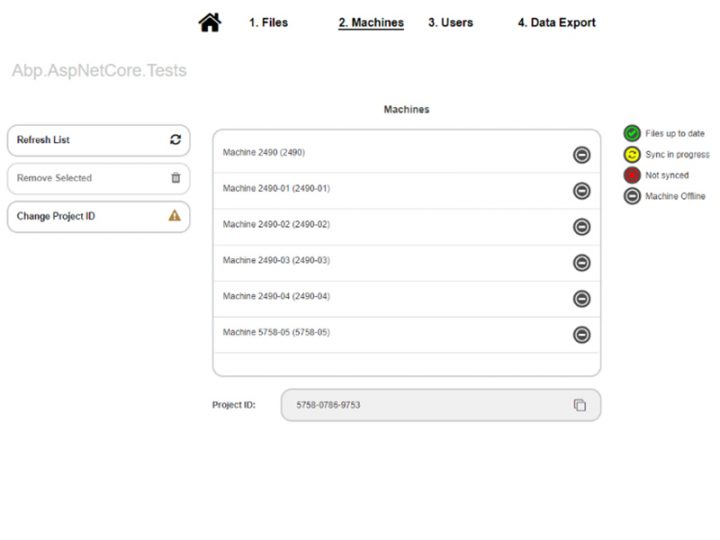
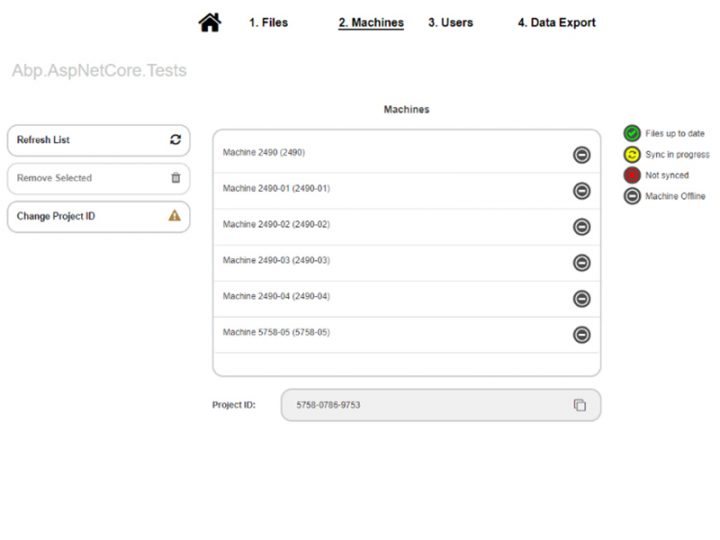
In general, the web application obtains information from a number of machines. These machines are integrated with heavy construction equipment such as excavator, wheel loader, surface drill or dozer which are operating at various construction areas. The main task of the machines is to upload their log points along with all essential information (operation situation, operation result, machine location) onto the web platform. Each machine uses its own project ID to join the project, syncing with the project data (project planning, work order, etc.)
BHSoft helped the client build this web platform. We used a full range of AWS services to manage the back end part and API of the web application. We also used AWS CodeCommit to store code, AWS CodeBuild to build code and deploy as well as AWS Code Pipe to automate development phases for better and faster release of features/ updates.
What is a Serverless Web Application?
Contrary to its name, "Serverless" doesn't mean there are no servers. It means the cloud provider (AWS, Azure, or Google Cloud) manages the server's allocation, scaling, and maintenance dynamically.
A typical Serverless app is built using Function-as-a-Service (FaaS) and Backend-as-a-Service (BaaS). You only pay for the exact duration your code runs, down to the millisecond.
Core Benefits of Serverless Architecture
Why are global enterprises migrating to Serverless in 2026?
Zero Infrastructure Management: No more patching, updating, or worrying about server capacity.
Automatic Scaling: Your app scales from one user to one million users instantly and automatically without manual intervention.
Cost Optimization (Pay-per-use): Traditional servers charge for "idle time." Serverless only charges when your code is triggered, leading to cost savings of up to 70-90% for many workloads.
Fast Time-to-Market: Developers can deploy features in hours rather than days by focusing on business logic instead of backend plumbing.
Built-in Availability: High availability and fault tolerance are "baked into" the service by the provider.
Read more: Cloud-Based Software Development: Advantages and Best Practices
Below is the full list of AWS services that BHSoft used in this project along with how and why they are useful in this specific case.
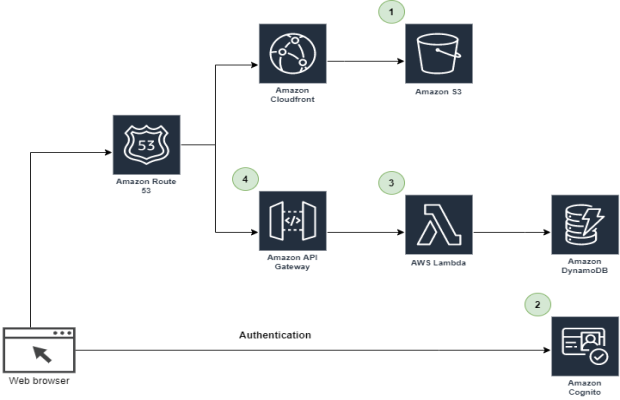
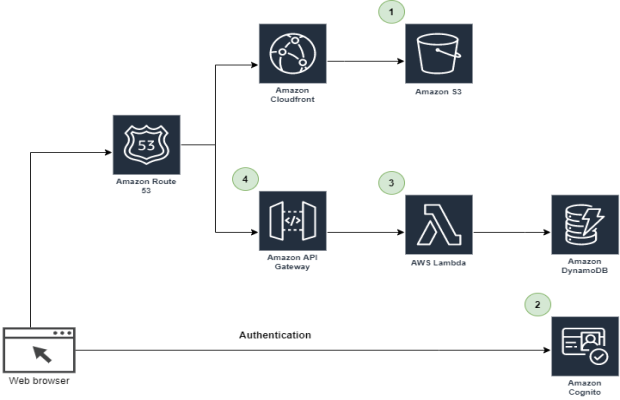
List of AWS services BHSoft uses
1. Amazon S3
We built the front end part with Angular 8 and then host it on Amazon S3. Basically we configured Amazon S3 to host the static resources for the customer’s web application. By using the static website hosting feature on an S3 bucket, we hosted a customer’s static website at a very low cost with great scalability that can handle millions of users.
2. Amazon Cognito
We used Anazon Cognito to manage user accounts and authenticate users. Users are able to register new accounts, verify their email address and sign into the site. Amazon Cognito provides user management and authentication functions to secure the backend API. Amazon Cognito is also convenient for testing and guest login.
3. AWS Lambda
We built a REST API using Java and AWS Lambda, each endpoint of the REST API is a separate serverless function that is deployed on AWS Lambda. Using Lambda saved us from paying for idle server time. This also helped us reduce the billing cost as well as cut down the project cost for customers.
4. Amazon API gateway
Amazon API Gateway provides tools for creating and documenting web APIs that route HTTP requests to Lambda functions. We added the API Gateway to route the request to the Lambda Cluster. The API gateway also implements security, e.g. verify that the client is authorized to perform the request. This method is very useful in securing access to the API with authentication and authorization controls.
Why Is Serverless Becoming a Major Trend in Modern Web Development?
Serverless is gaining rapid adoption thanks to several clear and practical advantages:
✔ Lower operational costs
You only pay for resources when your application is actually running—there’s no cost for idle servers sitting in the background. Compared to traditional server-based models, this can lead to significant cost savings.
✔ Automatic scalability
Serverless applications automatically scale up or down based on real user demand, without the need for manual configuration or capacity planning.
✔ No infrastructure management
Cloud providers take care of infrastructure updates, maintenance, and security, allowing development teams to focus on building features rather than managing servers.
✔ Faster development and deployment
Independent, event-driven functions can be developed and deployed quickly, helping teams shorten development cycles and bring products to market faster.
When Should You Use a Serverless Web Application?
Serverless is especially well suited for the following scenarios:
✔ Applications with unpredictable or fluctuating traffic
When user demand changes frequently, serverless can automatically scale up or down without manual intervention.
✔ Static websites or Single-Page Applications (SPAs)
Serverless works particularly well with static content and modern frontend frameworks, delivering fast performance with minimal overhead.
✔ Lightweight APIs or event-driven data processing
It’s an excellent choice for microservices, RESTful APIs, and background tasks triggered by events.
✔ Startups and businesses focused on speed and cost efficiency
For teams looking to shorten development cycles, launch faster, and keep infrastructure costs under control, serverless offers a highly flexible and cost-effective approach.
By combining services such as Amazon S3, Cognito, Lambda, and API Gateway, businesses can build a flexible, powerful, and highly scalable architecture that fits perfectly with today’s cloud-native landscape.
Read more: TOP 8 Best Practices for Cloud Security
Key Components of a Serverless Stack
To build a robust Serverless web application, we utilize a combination of cutting-edge cloud services:
Compute (FaaS): AWS Lambda, Google Cloud Functions, or Azure Functions to run backend logic.
API Gateway: Acting as the "front door" to manage and secure your API endpoints.
Databases: Serverless-native databases like MongoDB Atlas, AWS DynamoDB, or FaunaDB.
Storage: Amazon S3 or Google Cloud Storage for hosting static assets (HTML, CSS, JS).
Authentication: Amazon Cognito or Auth0 for secure, serverless identity management.
Overcoming Serverless Challenges in 2026
While powerful, Serverless requires a strategic approach to handle its unique challenges:
Cold Starts: In 2026, features like AWS Lambda SnapStart have virtually eliminated cold start latency, making Serverless viable for even the most latency-sensitive apps.
Vendor Lock-in: We use frameworks like The Serverless Framework or Terraform to ensure your architecture remains portable across different cloud providers.
Monitoring & Observability: We implement advanced tracing tools like Lumigo or Datadog to visualize event-driven workflows and debug complex distributed systems.
Why Bachasoftware for Serverless Development?
Implementing Serverless requires a shift in mindset—from monolithic thinking to Event-Driven design.
Agile Serverless Experts: We follow Agile Methodology to deliver iterative value, ensuring your serverless functions are modular and maintainable.
DevOps & GitOps Integration: We automate your entire serverless CI/CD pipeline using GitOps, ensuring safe and predictable deployments.
Security-First Coding: Our team ensures that every function follows the principle of "least privilege" access, protecting your data at every layer.
FinOps Focus: We don't just build; we optimize your function's memory and execution time to ensure you get the lowest possible cloud bill.
Is Serverless Right for You?
Whether you are building a modern e-commerce site, a real-time chat app, or a complex data processing engine, Serverless is likely the most efficient path forward in 2026.
Ready to scale without limits? Contact us today for a deep-dive consultation on how Serverless can transform your business.
If you’re planning to build a new application or modernize your existing architecture, serverless is a direction well worth considering and investing in. Contact us via hello@bachasoftware.com