
Phuong Thao Do
Content Marketing
Home > Insight > IT Business
Logistics Management Software: A key to cost-effective supply chains
5 minutes read
Audio description available
Updated on May 16, 2026
In 2026, the global supply chain has evolved into a hyper-connected ecosystem. Managing logistics is no longer just about moving goods from point A to point B; it’s about predictive intelligence. Logistics Management Software (LMS) has become the cornerstone for businesses aiming to maintain a cost-effective, resilient, and sustainable supply chain.
In this guide, we'll explore how Logistics Management Software works, its key benefits, and how to choose the right solution for your business.
%20(1).png)
What is Logistics Management Software?
Running logistics without the right tools is like managing an orchestra with no conductor. Logistics management software brings structure and control to supply chain operations, from transportation and warehousing to last-mile delivery.
At its core, it’s a centralized system that gives businesses real-time visibility into shipments, inventory, and orders. Instead of reacting to issues, teams can optimize routes, balance stock levels, and make data-driven decisions that improve efficiency and reduce costs.
In 2025, as global supply chains face higher customer expectations, rising labor and fuel costs, and increased complexity, logistics software has become essential for businesses that want to stay competitive and profitable.
Why Logistics Software is Essential in 2026?
The complexity of global trade demands more than traditional spreadsheets. Modern LMS provides:
Predictive Analytics: Utilizing AI to anticipate market shifts and potential disruptions before they happen.
Hyper-Visibility: Real-time tracking powered by IoT and 5G, ensuring every shipment is accounted for.
Cost Minimization: Reducing fuel consumption and labor costs through automated route planning.
Key Features of Logistics Management Software
To build a cost-effective supply chain, businesses should look for logistics management software that includes:
- Real-time shipment and inventory tracking
- Route and transportation optimization
- Warehouse and order fulfillment management
- Analytics and performance dashboards
- Integration with ERP, CRM, and WMS systems
- Cloud-based, scalable architecture for long-term growth
Who Needs Logistics Management Software?
Logistics management software is essential for businesses that manage complex supply chains, including:
- Logistics & 3PL providers handling multi-client operations
- E-commerce companies requiring fast, accurate delivery
- Manufacturers coordinating raw materials and finished goods
- Retailers optimizing warehouse and last-mile delivery
- Freight & shipping companies managing routes and fleet operations
Both SMEs and large enterprises use logistics management software to control costs, improve efficiency, and scale operations sustainably.
Read more: How Much Does Custom Software Development Cost
How Logistics Management Software Ensures Cost-Effective Supply Chains
In a competitive market, reducing supply chain costs is essential — and logistics management software makes it possible. By automating key processes, optimizing operations, and delivering real-time insights, it helps businesses cut expenses and boost efficiency.
A major cost driver is route optimization. The software analyzes distance, traffic, and capacity to plan the most efficient routes, lowering fuel use and transport costs.
Real-time inventory visibility is another benefit. Businesses can avoid stockouts or overstocking, reduce holding costs, and prevent losses from expired goods.
Automation also reduces reliance on manual labor. Tasks like order processing and data entry become faster and more accurate, freeing teams to focus on strategic work.
Most importantly, advanced analytics in logistics software empowers companies to make data-driven decisions — uncovering inefficiencies, improving carrier negotiations, and building a more cost-effective, resilient supply chain.
Core Features of High-ROI Logistics Software
Choosing the right logistics management software is a critical decision that can significantly impact your business's success. To ensure you select a solution that meets your specific needs, it's essential to consider the following key features:
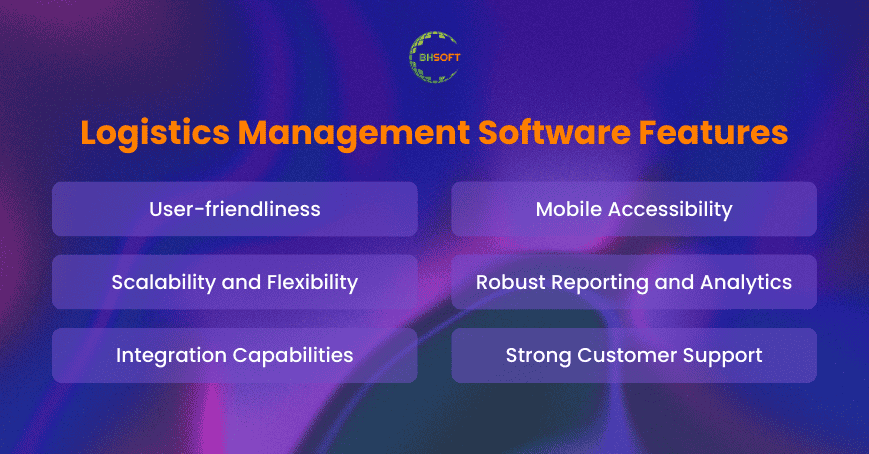
Choosing the right logistics management software is essential for improving efficiency, reducing operational costs, and staying competitive in 2026. The ideal solution should combine user-friendly functionality with advanced technologies that support scalability, automation, and sustainability.
User-Friendly and Scalable Platform
The software should offer an intuitive interface that is easy for both technical and non-technical users. A simple user experience reduces training time, minimizes operational errors, and improves productivity. At the same time, the platform must be scalable and flexible enough to support growing shipment volumes, additional users, and evolving workflows without major system changes.
Seamless Integration and Mobile Accessibility
Modern logistics software should integrate smoothly with ERP, CRM, eCommerce platforms, and last-mile delivery providers. Omnichannel integration ensures real-time data synchronization across the entire supply chain. Mobile accessibility is equally important, allowing drivers, warehouse staff, and managers to track shipments, update orders, and monitor inventory from anywhere.
AI-Powered Automation and Smart Inventory Management
High-ROI logistics platforms increasingly rely on AI-driven capabilities. Advanced route optimization tools can dynamically adjust delivery plans based on real-time traffic, weather conditions, and sustainability goals. Autonomous inventory management uses intelligent algorithms to reduce overstocking, optimize warehouse space, and lower holding costs.
Advanced Analytics and Sustainability Tracking
Built-in reporting and analytics dashboards help businesses monitor key KPIs such as delivery performance, transportation costs, and inventory turnover. In 2026, sustainability dashboards have also become a critical feature, enabling companies to track carbon emissions and comply with environmental regulations.
Blockchain Security and Reliable Vendor Support
Blockchain technology improves transparency by providing secure and immutable freight records, while smart contracts help automate logistics transactions. In addition, reliable customer support remains essential for successful implementation and long-term system performance. Businesses should look for vendors that provide onboarding, technical assistance, training, and regular software updates.
Read more: Best Machine Learning And Artificial Intelligence (AI) Trends
2026 Trend: The Synergy of AI and Green Logistics
The most significant shift in 2026 is "Green Optimization." Cost-effective logistics now goes hand-in-hand with sustainability. By optimizing routes to reduce "empty miles," companies can save up to 25% on fuel costs while meeting ESG (Environmental, Social, and Governance) goals.
Why Choose Odoo for Your Logistics Management?
As a preferred partner, BHSoft leverages Odoo’s flexible architecture to build custom logistics solutions:
All-in-One Business Platform
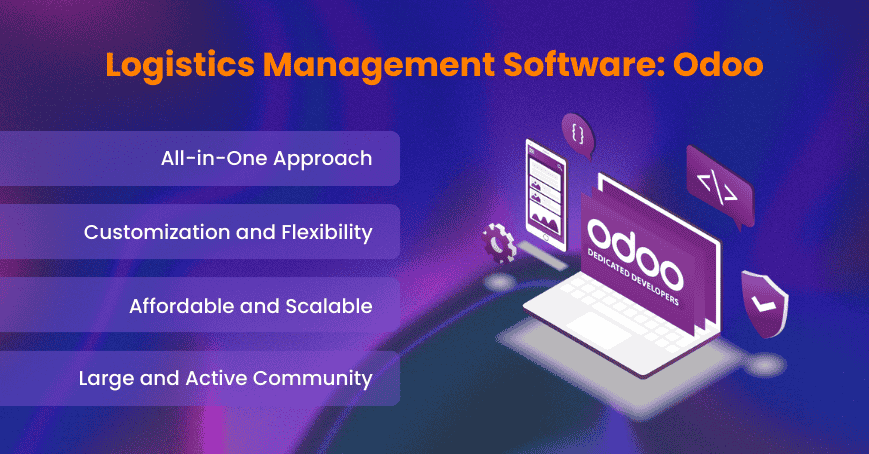
Odoo is more than just logistics software. It connects logistics with Accounting, Sales, Inventory, HR, and other business operations in one system. This helps businesses manage everything more efficiently and avoid disconnected data between departments.
Flexible and Customizable
Odoo can be customized to match your business workflows and industry needs. You can adjust features, dashboards, and AI-powered modules to support smarter inventory management, route planning, and logistics operations.
Scalable for Business Growth
Odoo is suitable for businesses of all sizes. Whether you manage a small local delivery team or a global 3PL operation, the platform can scale as your business grows without requiring you to switch systems.
Cost-Effective Solution
With flexible pricing and modular features, Odoo provides an affordable option for companies looking to improve logistics management while controlling operational costs.
Strong Community and Ecosystem
Odoo has a large global community of developers and users. Businesses can access extensive documentation, tutorials, third-party apps, and ongoing updates to continuously improve their system.
Read more: ERP for Logistics Company: Optimizing Your Business Operations
Case Study: Patang Logistics - Company That Improved ROI Using Odoo Logistics Software

Let's take a look at how Patang Logistics, a leading logistics provider, leveraged Odoo's powerful logistics management software to streamline their operations and boost their ROI.
Before implementing Odoo, Patang Logistics faced several challenges, including manual data entry, inefficient inventory management, and a lack of real-time visibility into their supply chain. These inefficiencies led to delays, errors, and increased operational costs.
By implementing Odoo's logistics management software, Patang Logistics was able to:
- Automate manual processes: Automating tasks such as order processing and data entry significantly reduced manual labor, freeing up employees to focus on more strategic initiatives.
- Streamline inventory management: Odoo's robust inventory management features provided real-time visibility into stock levels, minimizing the risk of stockouts and overstocking.
- Optimize delivery routes: The software's route optimization capabilities helped Patang Logistics minimize fuel consumption and reduce transportation costs.
- Improve customer satisfaction: By streamlining operations and ensuring timely deliveries, Patang Logistics was able to significantly improve customer satisfaction.
As a result of these improvements, Patang Logistics experienced a significant increase in efficiency, reduced operational costs, and enhanced customer satisfaction. This translated into a substantial increase in their ROI, demonstrating the real-world impact of implementing a robust logistics management software solution like Odoo.
Conclusion
In today's fast-paced and competitive business environment, implementing the right logistics management software is no longer a luxury, but a necessity. By streamlining operations, reducing costs, and improving customer satisfaction, logistics management software empowers businesses to gain a significant competitive edge.
However, choosing and implementing the right logistics management software can be a complex undertaking. As a trusted software development company in Vietnam, BHSoft possesses the expertise and experience to help businesses effectively leverage the power of logistics management software. By partnering with BHSoft, you can gain access to a team of skilled professionals who can help you unlock the full potential of logistics management software and drive significant improvements in your supply chain operations.
Contact us today to learn more about how BHSoft can help you streamline your logistics and achieve your business goals.