What is a virtual private network (VPN)?
5 minutes read
Jan 08, 2026
A VPN (Virtual Private Network) is a secure, encrypted connection between your device and another network over the Internet. It protects your data by sending it through a private tunnel, preventing unauthorized parties from viewing or intercepting your online activity.
The main purpose of a VPN is to protect data from monitoring and eavesdropping, especially when using public or unsecured networks. In business environments, VPNs are widely used to support secure remote work, allowing employees to safely access internal systems from anywhere.
Today, VPNs are not limited to enterprises. Many individuals use VPN services for personal privacy, safer browsing on public Wi-Fi, and access to region-restricted content. Whether for work or personal use, a VPN helps improve security and privacy online.
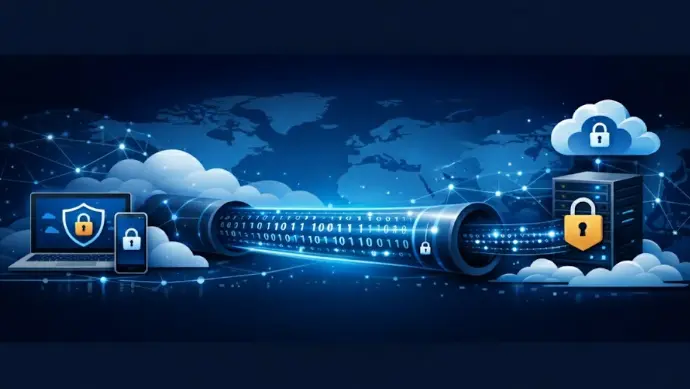
How a VPN Works
Encrypted Tunneling
A VPN creates a secure tunnel over the Internet that protects data as it travels between your device and the VPN server. This tunnel prevents unauthorized access while data is in transit.
Data Encryption
All data sent through a VPN is encrypted before leaving your device. This ensures that hackers, ISPs, and other third parties cannot read or monitor your online activity.
Data Routing and Decryption
When the encrypted data reaches the VPN server, it is decrypted and then forwarded to its real destination. Incoming data follows the same process in reverse, remaining protected throughout the connection.
IP Address Masking
A VPN replaces your real IP address with the VPN server’s IP, hiding your physical location and helping protect your online identity and privacy.
Types of Virtual Private Networks (VPNs)
Remote Access VPN
A Remote Access VPN allows an individual device, such as a laptop or mobile phone, to securely connect to a private network over the Internet. This type of VPN is widely used by remote employees to access internal company systems safely.
Site-to-Site VPN
A Site-to-Site VPN connects two or more private networks, typically used by businesses with multiple offices. It enables secure communication and data sharing between locations as if they were part of the same internal network.
Other VPN Types and Protocols
In addition to the main categories above, there are several other VPN types and technologies commonly used today. These include Mobile VPNs, which maintain stable connections for users on the move, and MPLS VPNs, often used in enterprise environments. Popular VPN protocols such as OpenVPN and IKEv2/IPsec define how VPN connections are established and secured, affecting performance and compatibility.
Core Benefits of a VPN
1. Enhanced Security and Privacy
A VPN creates an encrypted tunnel for all of your internet traffic. This effectively prevents eavesdropping, user activity tracking, and data theft by internet service providers (ISPs), hackers, or other third parties.
2. Protection on Public Wi-Fi Networks
Public Wi-Fi hotspots (cafés, airports, hotels) are often unencrypted, making them prime targets for Man-in-the-Middle (MitM) attacks. A VPN acts as a protective layer, ensuring your sensitive data remains secure even if the local network is compromised.
3. Bypassing Geographic Restrictions (Geo-blocking)
By masking your real IP address and routing traffic through servers in different regions worldwide, a VPN allows users to access content libraries, web services, or applications that are restricted by geographic location.
4. Secure Remote Access Solution
In enterprise environments, a VPN is an essential tool that enables employees to securely access internal systems (intranets) from remote locations. It establishes protected Site-to-Client or Site-to-Site connections, helping maintain productivity without exposing critical company resources.
5. Reducing ISP Throttling
Many ISPs intentionally limit bandwidth when they detect high-data activities such as streaming or online gaming. A VPN helps conceal the type of traffic being transmitted, preventing ISPs from identifying specific activities and, in many cases, maintaining more consistent connection speeds.
Limitations & Considerations
Potential Impact on Internet Speed
Using a VPN can slow down Internet speed due to data encryption and traffic routing through a VPN server. The impact varies depending on server distance, load, and encryption strength.
Service Quality Depends on the Provider
Not all VPN services offer the same level of security. Some free VPN providers may have limited performance, weak encryption, or questionable data practices. Choosing a reputable VPN provider is critical for both privacy and reliability.
Not a Complete Security Solution
A VPN protects your network connection, but it does not defend against all cyber threats. It cannot replace antivirus software or protect users from phishing attacks, malware, or unsafe websites. For full protection, a VPN should be used as part of a broader security strategy.
How to Choose the Right VPN: 5 Must-Have Criteria (2026)
Choosing a VPN is not just about price. Focus on these key factors to ensure security, speed, and reliability:
1. Security & Privacy
Look for AES-256 encryption, modern protocols like WireGuard, OpenVPN, or IKEv2/IPsec, a strict no-logs policy, and a kill switch to prevent data leaks.
2. Speed & Bandwidth
For streaming or gaming, choose a VPN with high-speed servers and unlimited bandwidth to avoid slowdowns.
3. Global Server Network
A large server network helps reduce latency and bypass geo-restrictions, with nearby servers for speed and distant servers for content access.
4. Multi-Device Support
The VPN should work across Windows, macOS, Android, iOS, and Linux, support browser extensions, and allow multiple devices per account.
5. Customer Support
Reliable VPN services offer 24/7 live chat, clear setup guides, and a free trial or money-back guarantee.
Free VPN vs Paid VPN: Which One Should You Choose?
Free VPNs
Free VPN services often come with serious limitations. Most free VPNs restrict bandwidth, throttle speed, offer a small number of server locations, and provide weaker encryption. Some free VPN providers may log user activity or monetize data through ads, which raises privacy concerns.
Free VPNs are only suitable for light, short-term use and not recommended for protecting sensitive data or long-term online privacy.
Paid VPNs
Paid VPN services offer strong encryption, strict no-log policies, faster connection speeds, and access to thousands of global servers. They also support advanced features such as kill switch, split tunneling, and multi-device usage.
Best VPN Services for 2026
Based on security standards, performance, real-world usage, and user trust, these are among the best VPN providers in 2026:
- NordVPN – Best overall VPN for security, speed, and advanced features
- ExpressVPN – Excellent speed and reliability, ideal for streaming and global access
- Surfshark – Best value VPN with unlimited device connections
- ProtonVPN / CyberGhost – Strong alternatives focused on privacy and ease of use
All leading providers offer a 30-day money-back guarantee, allowing users to test the service risk-free.
NordVPN vs ExpressVPN vs Surfshark: Detailed Comparison
|
Criteria |
NordVPN |
ExpressVPN |
Surfshark |
|
Security & Encryption |
Excellent |
Excellent |
Very good |
|
Speed Performance |
Very fast |
Extremely fast |
Fast |
|
Server Network |
5,000+ servers |
3,000+ servers |
3,200+ servers |
|
Device Limit |
6 devices |
5 devices |
Unlimited |
|
Long-term Pricing |
Mid-range |
Premium |
Most affordable |
|
Best For |
All-around protection |
Speed & stability |
Budget & multiple devices |
Use Cases — Common VPN Use Scenarios
· Individual Users: For personal users, a VPN helps protect online privacy, reduce tracking, and access international or region-restricted content while browsing the Internet.
· Businesses: In business environments, VPNs are widely used to enable secure remote work and connect multiple offices through protected network links, ensuring safe access to internal systems.
· Industry-Specific Use Cases: VPNs are also valuable in specific sectors such as travel, research, and education, where secure access to global resources and protected data transmission are essential.
Read our next article: Top 10 Free GIS Software