
Ngoc Nguyen
SEO Engineer
Home > Insight > Technology
10 Best Construction ERP Systems of 2026: Top ERP Solutions for the Construction Industry
5 minutes read
Audio description available
Apr 11, 2026
The construction industry in 2026 looks nothing like it did a decade ago. Digital transformation is no longer a choice—it’s the backbone of survival. As global material costs fluctuate and project complexity rises, Enterprise Resource Planning (ERP) for the construction industry has evolved from a back-office tool into a real-time command center.
An ERP system for construction companies eliminates data silos by unifying finance, workforce planning, and procurement into a single source of truth. By integrating AI-driven insights with equipment tracking, these platforms allow contractors to manage sub-contractors and cash flow with surgical precision.
This guide evaluates the 10 best construction ERP software solutions of 2026 that help firms build faster, leaner, and smarter in an AI-first era.
Top 10 Best Construction ERP Software Solutions in 2026
Below is a deeper, practitioner-level breakdown of the leading enterprise resource planning ERP for construction industry, focusing on real capabilities, limitations, and ideal use cases.
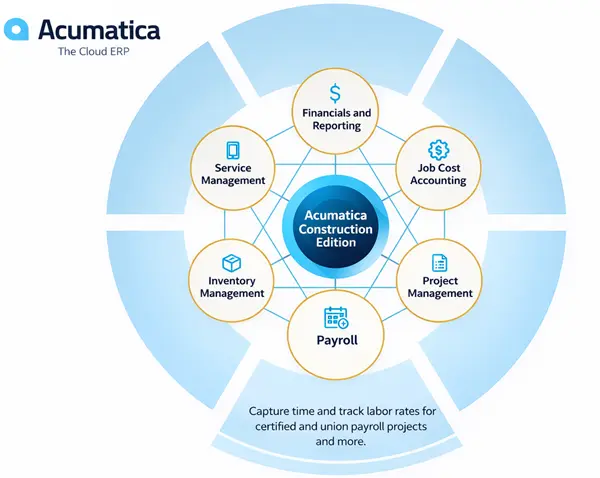
1. Acumatica Construction Edition
Acumatica has become a go-to cloud ERP for mid-sized construction companies thanks to its flexibility and modern architecture.
Key Features:
Native cloud platform with open APIs
Integrated project accounting, payroll, and job costing
Real-time dashboards for financial and operational visibility
Change order and subcontractor management
What Sets It Apart:
Acumatica uses a consumption-based pricing model rather than per-user licensing—making it cost-effective as teams grow.
Limitations:
Requires implementation partners for full customization
Reporting can require some configuration upfront
2. Procore
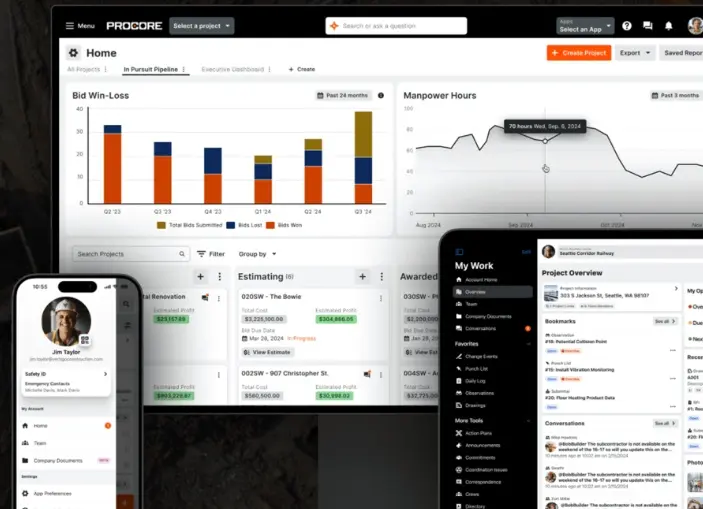
Procore is a construction management platform with ERP-like capabilities, but in 2026, its financial tools have matured significantly.
Key Features:
Field-first mobile platform
Project management, RFIs, submittals, and document control
Financial tools including budgeting, forecasting, and invoicing
Integration with accounting systems like QuickBooks and Sage
2026 Innovation: AI-powered bid leveling and document parsing—helping teams analyze tenders faster and more accurately.
What Sets It Apart:
Its ecosystem—hundreds of integrations make it the most connected construction ERP software with mobile-first capabilities.
Limitations:
Not a full standalone ERP for finance-heavy organizations
Costs can scale quickly with modules
3. Sage 300 Construction and Real Estate
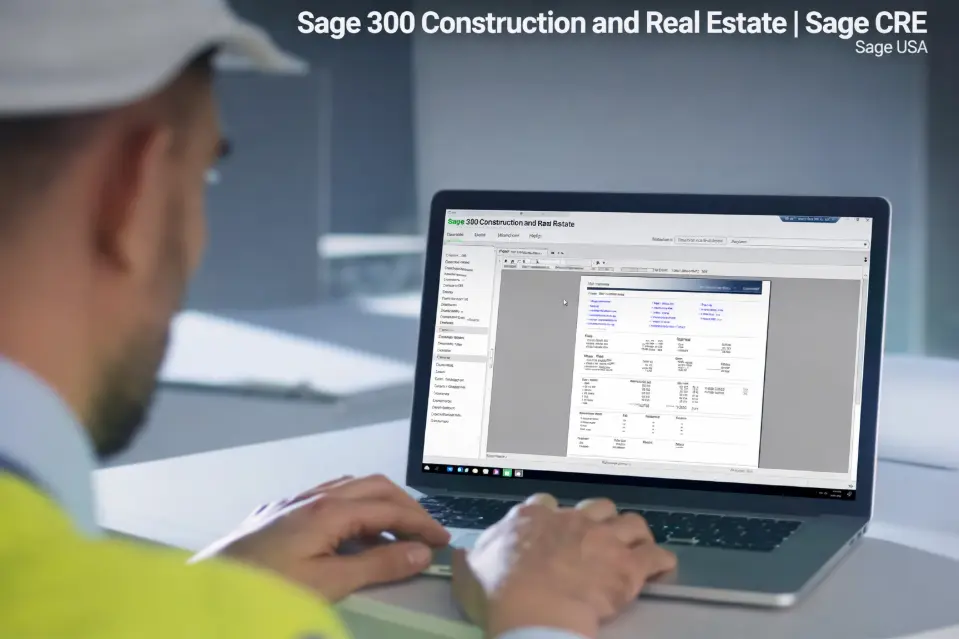
Sage 300 remains a leading ERP system in the construction industry for financial management and regulatory compliance. It is well-suited for companies that require high accounting accuracy and strict compliance.
Key Features:
Advanced job costing and payroll
General ledger, accounts payable/receivable
Equipment tracking and property management
Strong audit trails and compliance reporting
What Sets It Apart:
Its accounting depth—few systems match its precision in construction financial management ERP solutions.
Limitations:
Older UI compared to modern cloud platforms
Limited native cloud capabilities (often hosted or hybrid)
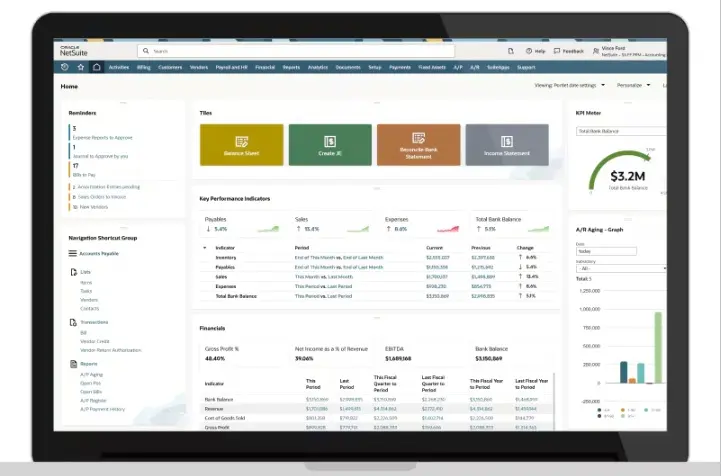
4. Oracle NetSuite for Construction
NetSuite delivers a unified, cloud-native ERP platform for global construction enterprise management.
Key Features:
Multi-entity and multi-currency management
Real-time financial consolidation
Procurement and supply chain management
CRM and HR modules included
What Sets It Apart:
A single platform for the entire business—ideal for organizations operating across regions.
Limitations:
Higher cost of ownership
Requires careful implementation planning
5. Microsoft Dynamics 365 Business Central
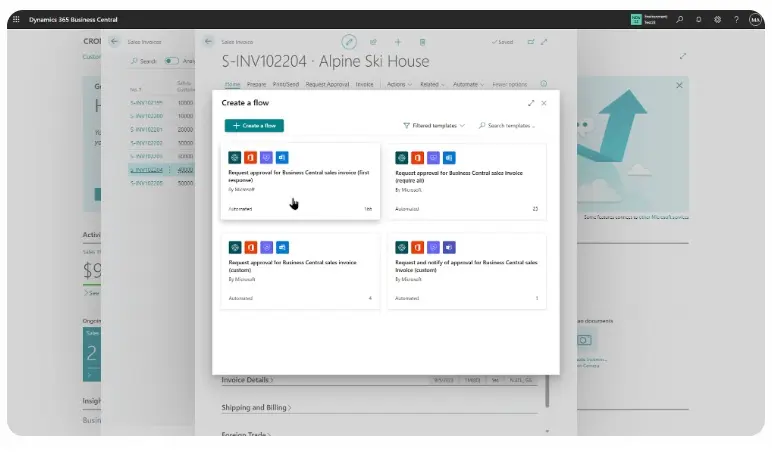
A highly adaptable ERP system for construction companies using Microsoft ecosystem, offering strong flexibility.
Key Features:
Financial management and project accounting
Integration with Microsoft Teams, Excel, and Power BI
Custom workflows via Power Platform
Third-party construction add-ons
What Sets It Apart:
Its extensibility—companies can tailor it into a custom ERP solution for construction business workflows.
Limitations:
Requires add-ons for full construction functionality
Customization can increase complexity
6. Viewpoint Vista (Trimble)
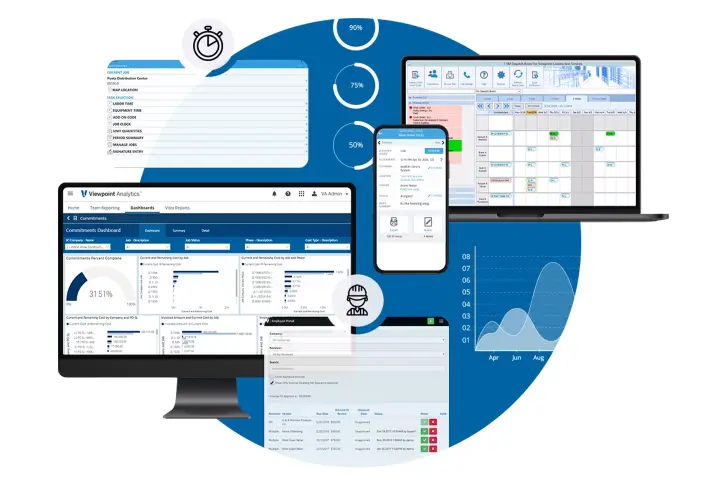
Vista is a deep, operationally focused ERP software for large general construction contractors.
Key Features:
Job costing, equipment management, and HR
Advanced reporting and analytics
Integration with Trimble’s construction tech ecosystem
Strong support for complex project structures
What Sets It Apart:
Operational depth—especially for heavy civil and infrastructure projects.
Limitations:
Steeper learning curve
Less intuitive UI compared to newer platforms
7. Foundation Software
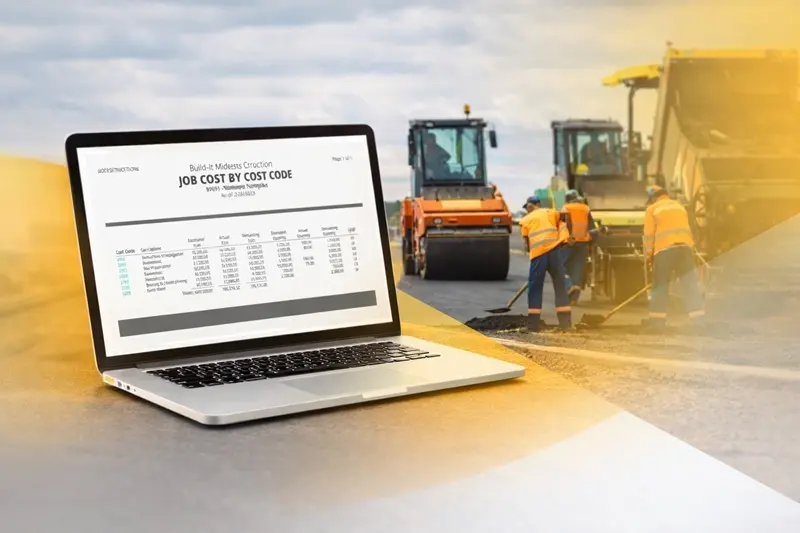
Foundation is purpose-built for construction accounting for small and mid-sized contractors, making it a powerful ERP system for project cost tracking and construction payroll management.
Key Features:
Detailed job costing and cost tracking
Certified payroll and compliance tools
Equipment and project management modules
Built-in reporting tailored for contractors
What Sets It Apart:
Simplicity and focus—no unnecessary features, just what contractors need.
Limitations:
Limited scalability for large enterprises
Less emphasis on advanced analytics or AI
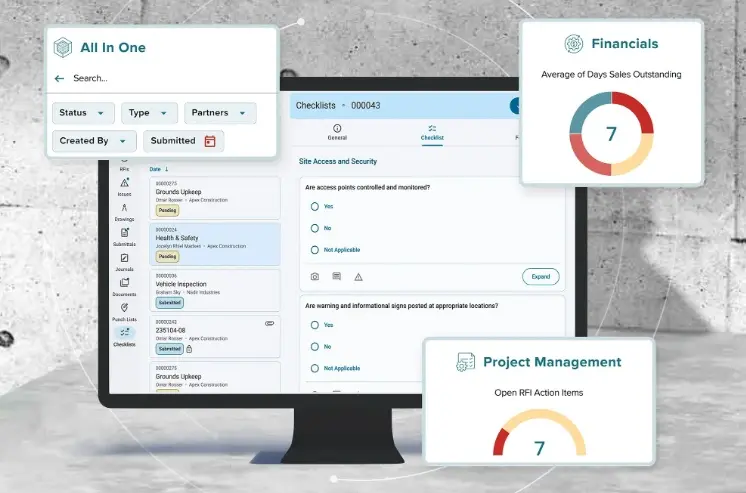
8. CMiC
CMiC offers a unified platform covering both financials and project operations, making it a strong end-to-end construction ERP system.
Key Features:
Project management and financial modules in one system
Document management and workflow automation
Compliance tracking and audit readiness
Real-time project visibility
What Sets It Apart:
Single database architecture—no data silos between finance and operations.
Limitations:
UI can feel dated
Implementation requires experienced consultants
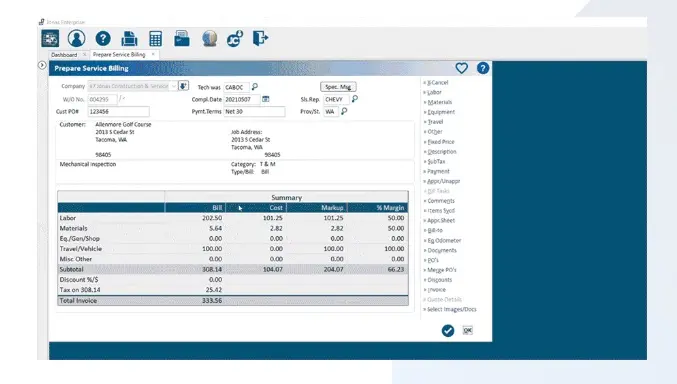
9. Jonas Enterprise
Jonas stands out by combining ERP with service management.
Key Features:
Construction accounting and job costing
Service management and dispatching
Equipment tracking and maintenance
Customer management tools
What Sets It Apart:
Perfect for companies offering both construction and post-build services.
Limitations:
Less suited for large-scale infrastructure projects
Interface is not as modern as newer SaaS tools
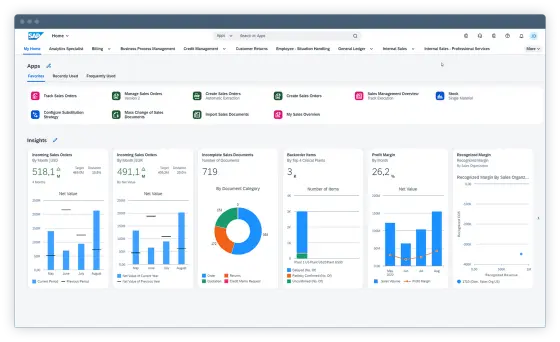
10. SAP S/4HANA Cloud for Construction
SAP brings enterprise-grade power to construction with a high-performance ERP system for large construction enterprises.
Key Features:
Real-time analytics powered by in-memory computing
Advanced supply chain and procurement management
AI-driven forecasting and automation
Global compliance and financial management
What Sets It Apart:
Unmatched scalability and data processing—ideal for mega-projects and global operations.
Limitations:
High implementation and operational costs
Requires significant internal expertise
Read more: Top ERP systems 2026
Construction ERP Trends in 2026 and Beyond
To stay competitive, companies need more than just software—they need future-ready ERP systems for construction project management.
1. AI-Powered Predictive Analytics
AI is turning ERP into a decision intelligence platform:
- Forecast project delays before they happen
- Predict material price fluctuations
- Identify risk patterns across portfolios
2. BIM Integration
The deep construction ERP and BIM integration now creates a seamless, end-to-end workflow that unifies project data with financial management.
- Real-time sync between 3D models and cost data
- Automated quantity takeoffs
- Financial impact simulation directly from design changes
3. ESG & Sustainability Tracking
Leading cloud ERP solutions for construction companies now include:
- Carbon footprint tracking per project
- Waste management analytics
- ESG compliance reporting
4. Mobile-First & Edge Computing
The best mobile ERP software for construction field teams now offers:
- Offline data capture
- Real-time sync from job sites
- Edge processing to reduce latency
4 Key criteria for evaluating Construction ERP Systems
Choosing an ERP isn’t just a software purchase—it’s a strategic upgrade. To lead in 2026, your platform must excel in these four areas:
1. Limitless Scalability: Your system should scale as fast as your skyline, supporting multi-region expansion and complex project portfolios without breaking a sweat.
2. Precision Job Costing & Tracking: Forget generic tools. Demand industry-specific capabilities like granular job costing, real-time equipment tracking, and automated subcontractor management to protect your margins.
3. Hyper-Connected Ecosystem: A top-tier ERP integration platform for construction software acts as a digital hub, seamlessly syncing BIM models, CRM data, and payroll systems via flexible APIs.
4. Field-First Experience: If your site teams find it clunky, your data is dead. Prioritize a mobile-optimized UI/UX that ensures 100% adoption from the office to the edge of the construction site.
Read more: ERP implementation cost
How to choose the Right ERP for Your Construction Business
Selecting a Construction ERP in 2026 isn't just about digitizing spreadsheets; it’s about building a unified data environment. To ensure your investment drives long-term scaling, follow this strategic selection framework:
1. Identify Your Core Pain Point
Don't try to boil the ocean. Map your internal workflows to identify where the most significant "margin erosion" occurs. Are you struggling with:
- Inaccurate WIP (Work in Progress) reporting or fragmented job costing?
- Siloed communication between the field and the back office?
- Underutilized heavy equipment or labor scheduling conflicts?
Tip: Choose a solution that excels at your weakest link first, then scales to other departments.
2. Evaluate Integration Capabilities
In 2026, your construction ERP system with API integration capabilities should connect seamlessly with existing tools.
- BIM (Building Information Modeling) for 5D quantity takeoff and cost estimation.
- Linking tools like Procore or Autodesk Build to your General Ledger.
- IoT & Telematics for automating equipment usage hours and fuel tracking directly into your financial modules.
3. Assess Local Support
A modern ERP should do more than record history; it should predict the future. Look for vendors offering Generative AI and Predictive Analytics that can:
Flag potential budget overruns
Analyze historical data to improve bid accuracy.
Automate mundane data entry using OCR (Optical Character Recognition) for invoices and field reports.
4. Assess Local Expertise & Adoption
Even the best ERP fails without local implementation. Choose vendors that offer:
Regional compliance (tax, payroll, legal)
Industry-savvy consultants
On-site training for field teams
5. Focus on Long-Term ROI
Look beyond upfront cost. Measure value through:
Faster billing (lower DSO)
Reduced material waste
Improved labor efficiency
Summary
This article highlights top construction ERP software solutions that unify project management, finance, and operations to improve efficiency, decision-making, and cost control.
As a trusted technology partner, Bachasoftware offers tailored ERP development and integration services, helping construction businesses adopt scalable, cloud-based solutions that align with their workflows. With deep expertise in software outsourcing and digital transformation, Bachasoftware empowers companies to maximize the value of construction ERP systems and stay competitive in an increasingly complex industry landscape.
Common FAQs
Construction ERP software is an integrated system that helps construction companies manage core operations such as project management, accounting, procurement, payroll, and equipment tracking in one platform.
Costs vary based on features, number of users, and deployment type (cloud vs. on-premise). Pricing can range from a few thousand to hundreds of thousands of dollars annually.
Yes, most modern construction ERP systems integrate with tools like BIM software, CRM platforms, scheduling tools, and IoT devices for real-time data tracking.
Implementation can take anywhere from a few months to over a year, depending on company size, complexity, and customization requirements.
By providing real-time insights, reducing errors, optimizing resource allocation, and speeding up billing cycles, ERP systems help increase margins and overall efficiency.